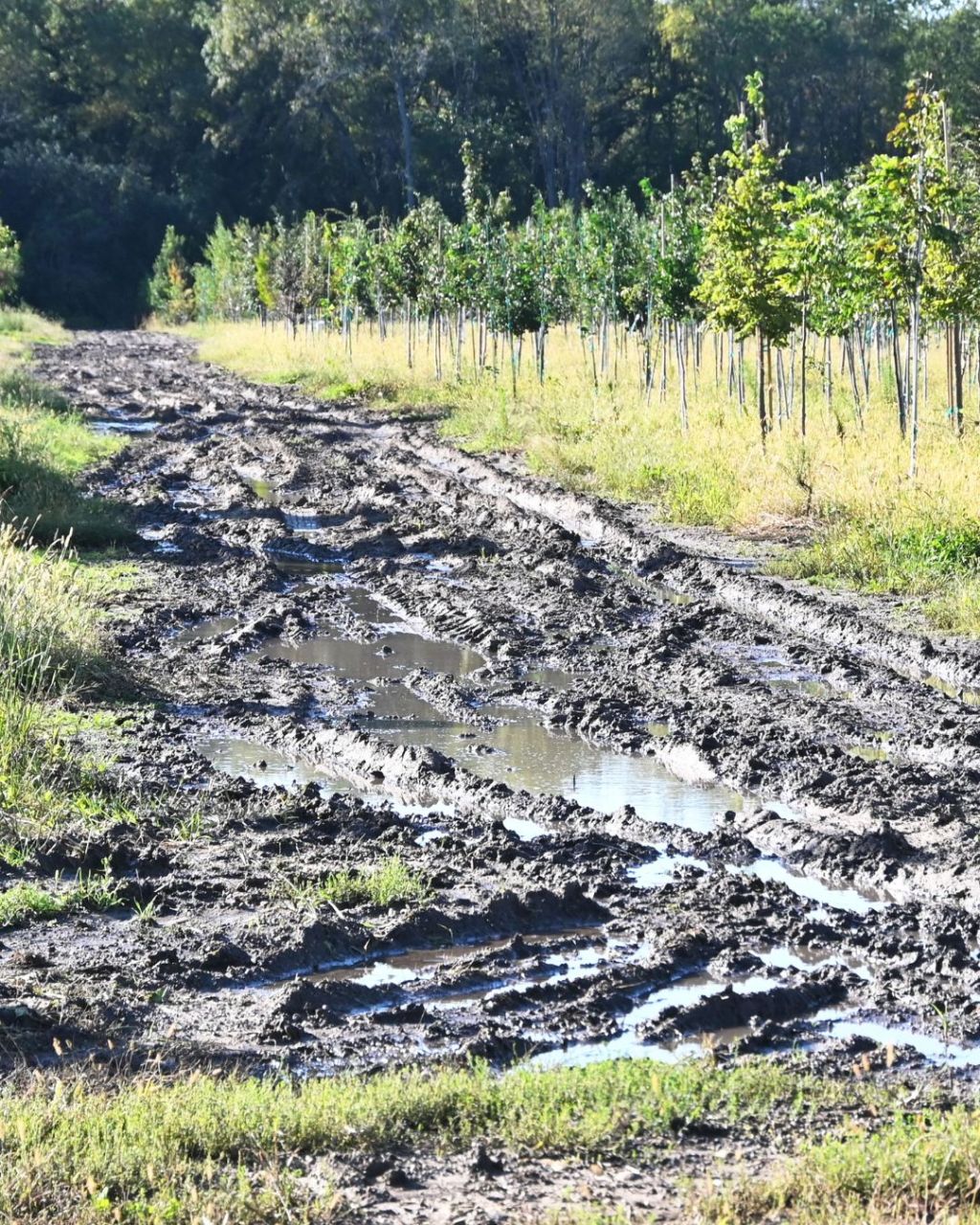
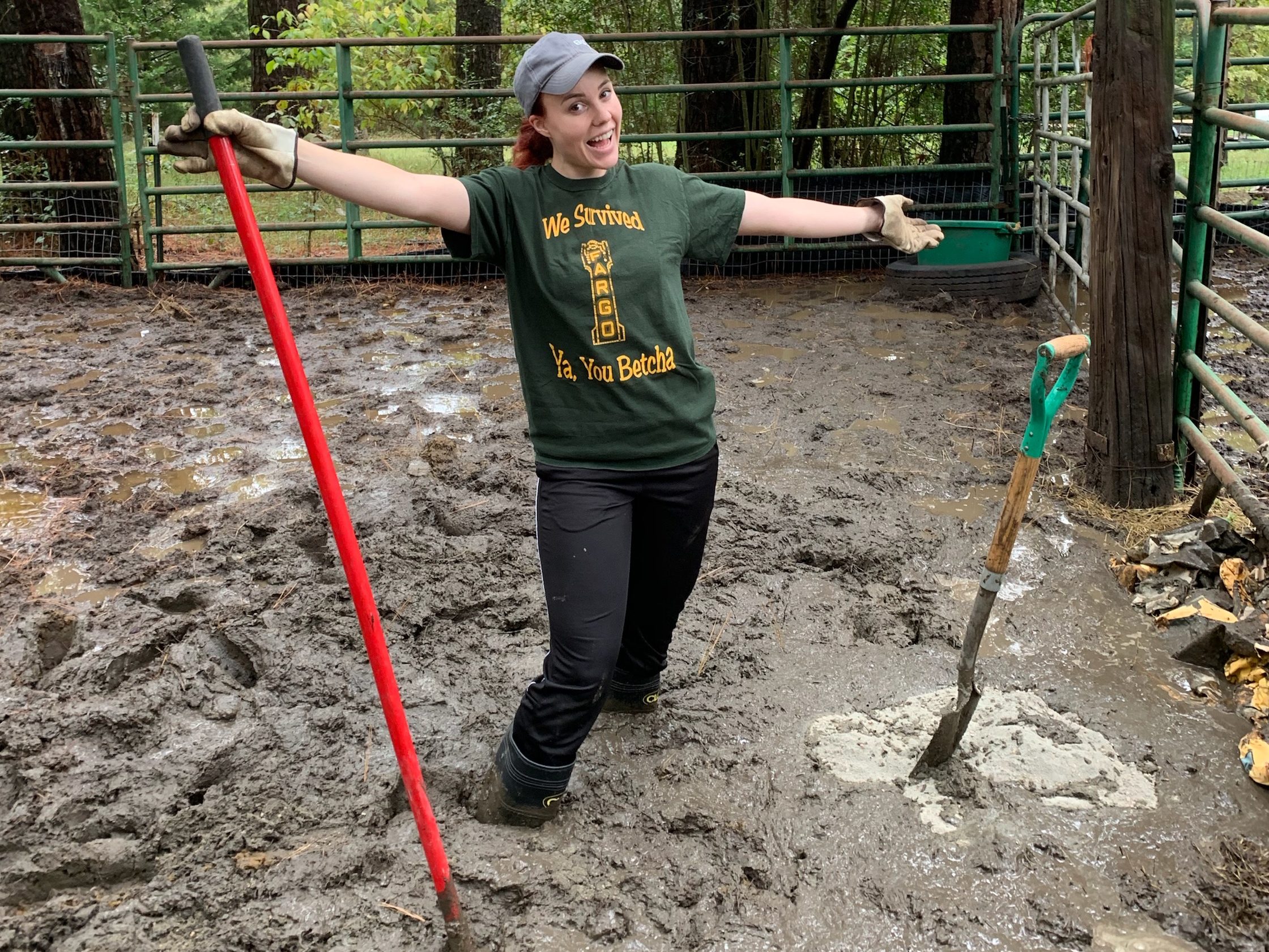
I bet you can’t guess what inspired this blog. An unseasonal January rain event involving 10+ inches in only 3 days, management of mud is all we can think about during feeding time.
And really, before we manage mud, we need to manage water.
In living with a few barns over the years and working at a few more, I’ve gathered up a list of items to think about when building, or buying, a property with a barn.
Gutters
Yes, your barn needs gutters. Commercial grade gutters. Barns typically have a large roof line, which collects a lot of water. By installing gutters, you can control the direction of that water. Said gutters should truly be run underground away from your pens and into a low-traffic area. Landscaping stores sell 4-inch piping you can affix to the terminating end of the gutter, and with the help of a excavator, you can bury this pipe underground and route this pesky water far away from your pens.
Barn Height and Design
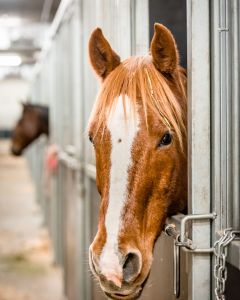
Well, we may have missed the mark a bit on this one. In ensuring we could easily get a skid-steer in and out of the barn to clean pens, and making sure we had room for future fan installation…..we ended up with a tall barn. At the eaves, it is 12 feet. And while it has fantastic airflow and has great air insulation during the hot days of summer….it does let in a lot of rain. Consider dropping your eaves to 9 or 10 feet and just learning to be careful with your skid steer and/or tractor.
Size of pens also make a big difference in the percentage of dry areas available and in your animal’s sanity. Odds are, they will be cooped up in their stalls in an effort to keep them dry and clean, so make sure you have ample space for them to move around. I’ve seen a lot of barns with 12×12 stalls, or worse, even smaller. While this is a good size for a guest bedroom, your livestock are a bit larger than your in-laws. My barn has 14×16 stalls and I still wish they were bigger. A larger stall also has a better chance of a portion staying dry from blowing rain or your livestock tracking in water.
Barn Location
Location, location, location. While this does seem obvious, somehow a lot of barns end up in a hole behind the house. Consider building your barn on a hill if you have it available, or at least bringing in enough dirt to build it up above the surrounding topography. Thankfully, my husband is in the dirt business (which is really just the business of routing water) and he built a pad for our barn a few inches above the surrounding area and then ensured my pens sloped away from the covered portion of the barn. Coupled with my gutters, this ensures water runs away from the barn and pens will dry out quicker.
Soil Drainage
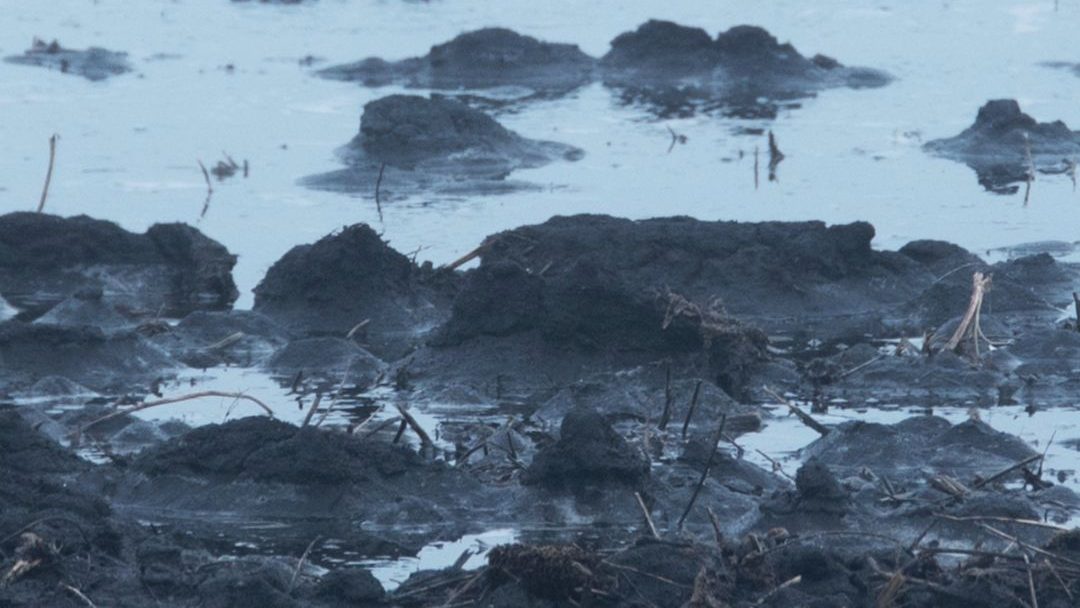
Getting into the (potentially) expensive options…. Dirt and drainage. Yes, having sand topsoil is the ideal situation. But as many know, that isn’t always a choice. You can haul in truckloads of sand or gravel to build up your stalls and pens, just be prepared it takes far more than you realize (I know from experience) and that can hurt your wallet a bit. They also have options for grid-like structures to put under your top-dressing, which are highly effective…but cost is always a consideration. Lastly, with those fancy haired cattle like I love so much, sand and gravel are incredibly hard on leg hair. A weird consideration for anyone without show cattle, but an important one, nonetheless.
Arenas
To segue off location and drainage of the barn, is location and drainage of the arena. Just like overhead water lines, stall cushions, and hauling in gobs of beautiful sandy topsoil, a covered arena is the ultimate goal. But, similar to the aforementioned, it’s not always financially feasible.
When building your arena, make sure to stick it in a sunny location, that way, when it does collect water, it will be the first to dry out. You’ll also want to build it with a good crown and maintain that crown when dragging. This crown will allow water to “sheet off” and move out of there when it rains. However, as that rain flows off, it does tend to take some material with it. To prevent drastic erosion and preserve your investment in arena footing, you may consider skirting your arena with railroad ties. These will help to stop or slow down the flow of water and minimize erosion and wash out.
Airflow
Even with the above measures, a barn is a barn and it will get wet. Something we often forget to consider is airflow. In the show cattle world, we try as hard as we can to keep sun (and subsequent heat) off our critters; however, this means our barns also miss out on the drying power of sunshine. BUT, we can take advantage of air. By either ensuring your barn takes advantage of airflow through positioning of the structure, or creating areas you can open up to encourage air movement, you’ll be able to reap some drying benefits. Sliding doors you can open on either end of the aisle way are a great way to get air movement through a stale barn. Installation of large overhead fans will also help.
Roads, Parking, and More
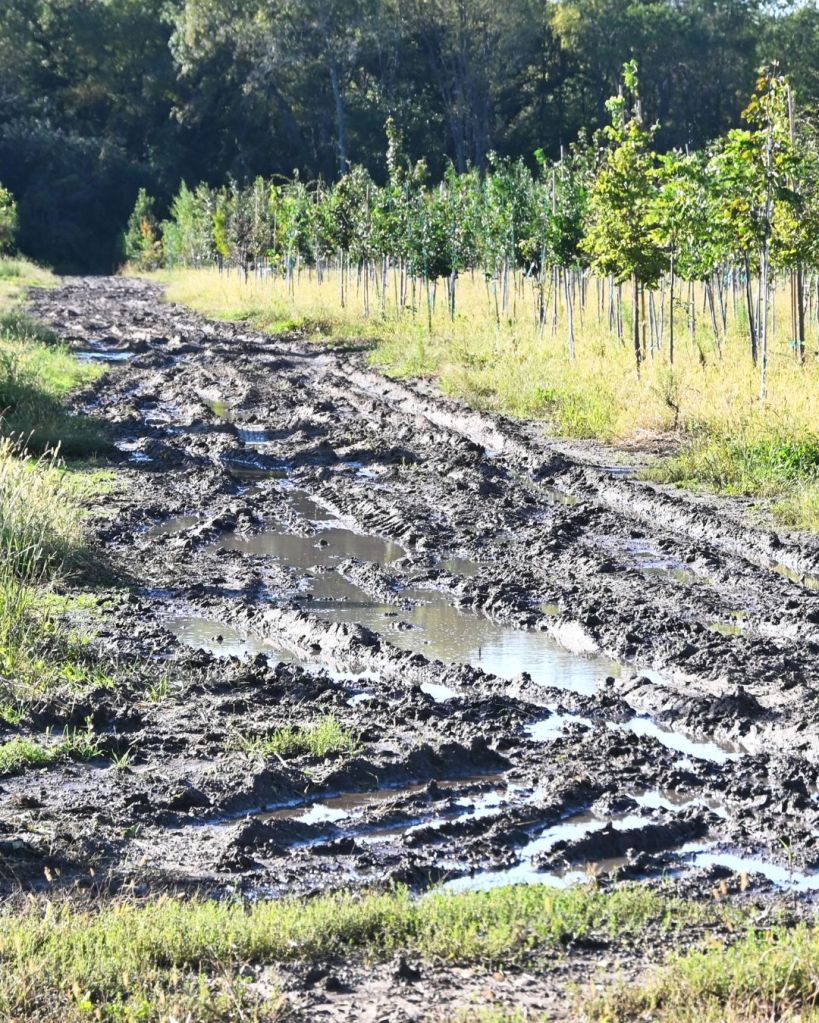
Water is inevitable and you can only do so much at the end of the day. When you get historical rainfall, things are just wet. But building good roads to your barn and especially your trailer parking area are so, so critical. Because do you know when your horse will colic or choke? Or your heifer decides to bloat? When it is 10 p.m. on a Friday night and you’ve had 4 inches of rain in the last hour. Make sure you can get to your trailer and not get stuck doing so.
This might mean creating water diversions like ditches or culverts, and it likely includes putting down good road base in these areas. I promise you’ll be thankful for that extra couple loads of rock when you’re able to calmly, and easily hook up your trailer in a rainstorm on Friday night. If you do decide to pour concrete drives or pads, make sure they are large enough to maneuver said truck and trailer easily. Think 16 foot roads and large turn around areas.
Final Thoughts
While not an exhaustive list, it is comprehensive. Like State Farm says, I know a thing or two, because I’ve seen a thing or two. Especially that bit on when you need to get your trailer out without slinging mud all over it and destroying the ground. Ask me how many quarters it takes to wash a gooseneck.
I’ve never heard the words, dang, I wish my barn would stay wet, so putting some careful thought and a little money into some of these conveniences will save you a lot of headache. Your livestock will thank you, too!
 Home
Home 
Leave a comment