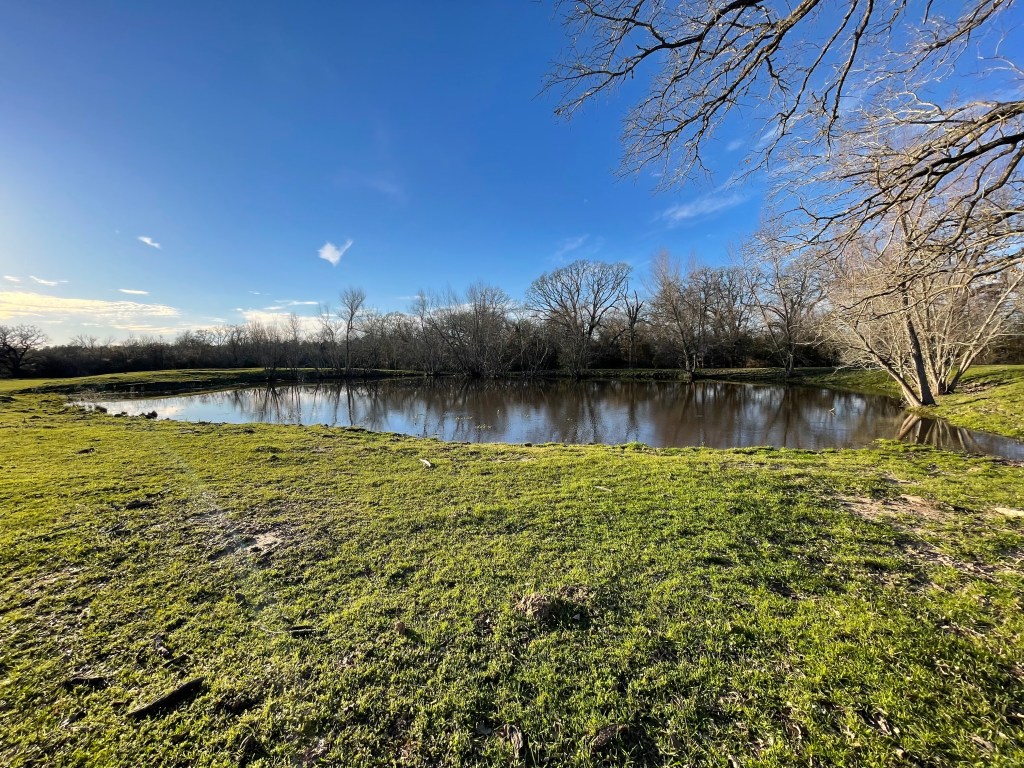
Landowners have many reasons for desiring a water source on their property. It may be an economical source of livestock water, a recreational area to enjoy for hunting or fishing, or maybe just a neat place to hang out on a summer night. More often than not, it is a combination of these and more.
While your desired use does factor a bit into design, it is probably lower on the scale than you may think. For example, improper site selection with little water catch can leave your dream fishing reservoir running dry in the summer months. Alternately, not selecting a steep enough slope or regular maintenance to remove silt may leave you with aquatic vegetation that requires time and money to manage.
In essence, it may come as a surprise everything that goes into a pond. Simple in theory, yet complex in design and execution. I leaned hard into my husband, who is a dirt contractor, for his views on constructing a pond for the long haul. Together, we have put together an overview of what we think is a comprehensive guide to building and maintaining the perfect pond.
Permitting and the Authorities
This is not a paragraph or a topic that will age well. I say that because it seems the EPA changes their definition of which waters fall under their jurisdiction in relation to which party is in office. The latest Waters of The United States (WOTUS) ruling is more vague than ever before. Here’s the link to their current fact sheet regarding what is considered within their jurisdiction.
Confusing right? When it comes to Texas water laws, you’ll need to keep 2 parties in mind. Groundwater Conservation Districts (GCD) and the Texas Commission on Environment Quality (TCEQ). Due to the ever-changing nature of case law on the topic of surface and groundwater, I’m going to reference out to Tiffany Dowell Lashmet, an Assistant Professor and Extension Specialist with Texas A&M Agrilife Extension. She’s got a fantastic article on the Basics of Texas Water Law. Your local extension office will also be a great resource to get the most up to date information.
Take faith there are some exemptions when it comes to livestock water sources, but make sure to contact the appropriate authorities before spending thousands building your pond. Especially if you are considering blocking a stream or creek to create a reservoir – no matter how intermittent that water source runs.
Site Selection
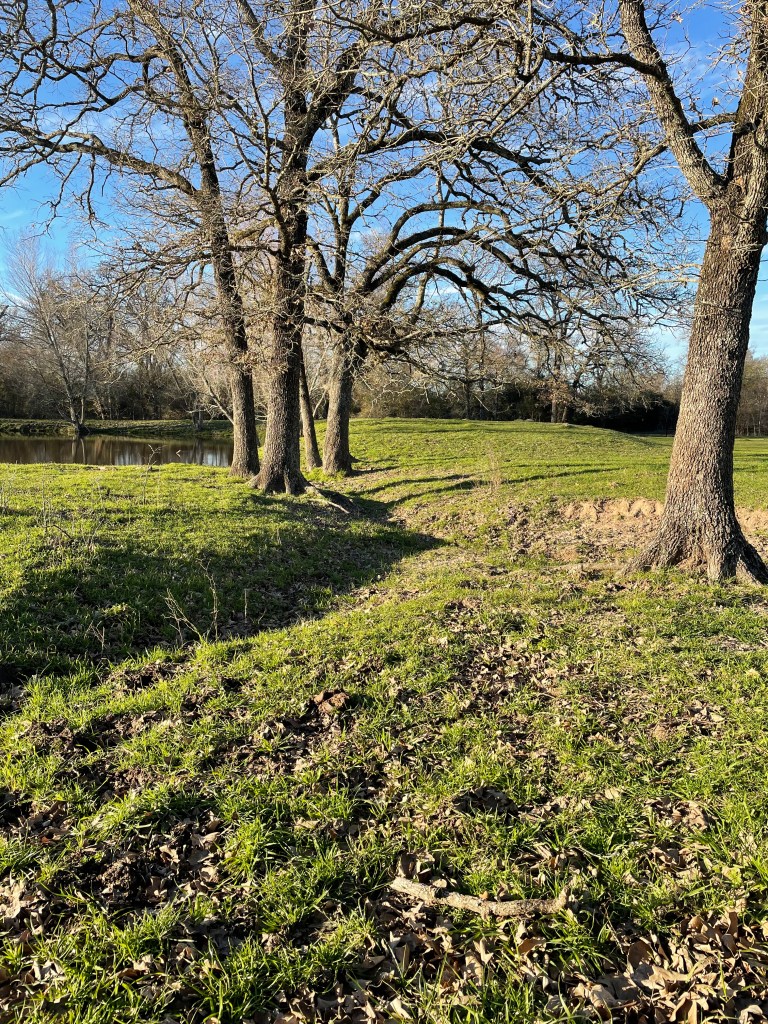
Once you are confident you have obtained any necessary permits and/or clearance to construct your pond, you’ll need to select the perfect location. Site selection is much more than just aesthetics, it’s also considering the water capture potential, the location within your pasture systems, size for your needs, and soil type. Each of these factors plays an important role in choosing the perfect location. Because if you miss one, you may be left with an expensive hole in the ground that doesn’t give you much bang for your buck.
The potential to capture surface water runoff, or “catch”, might be the single most important factor that makes or breaks your pond. Look for locations in naturally low-lying areas, or areas that show plenty of evidence surface water runoff. You want to select a location that will feed your pond with adequate surface water to keep it from running dry.
Ideally, you would find a location that is spring-fed, but this isn’t always feasible, so make sure to select one with lots of good catch! You’ll be grateful in the drought years.
The size of your pond may be dictated by the size of your property. Clearly, a 2-acre tract doesn’t need a 1-acre pond. When it comes to watering livestock, I’m not sure there is an exact formula to pond size per number of head. More that it can sustain an adequate water level throughout the year. This probably has more to do with catch potential and soil leaching and less to do with the number of livestock drawing on it.
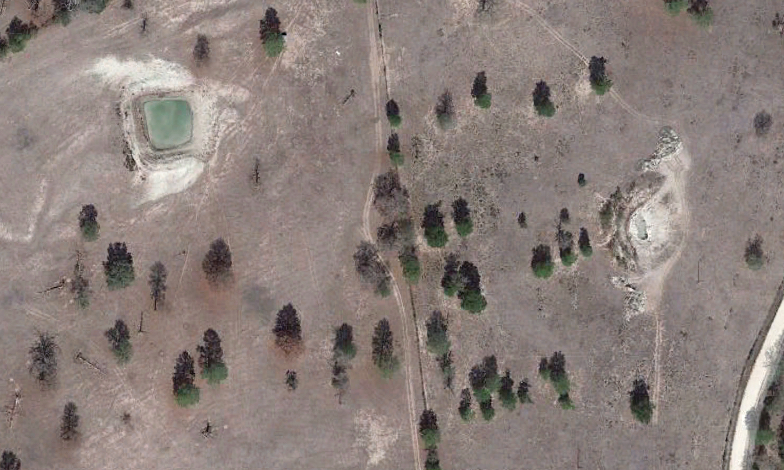
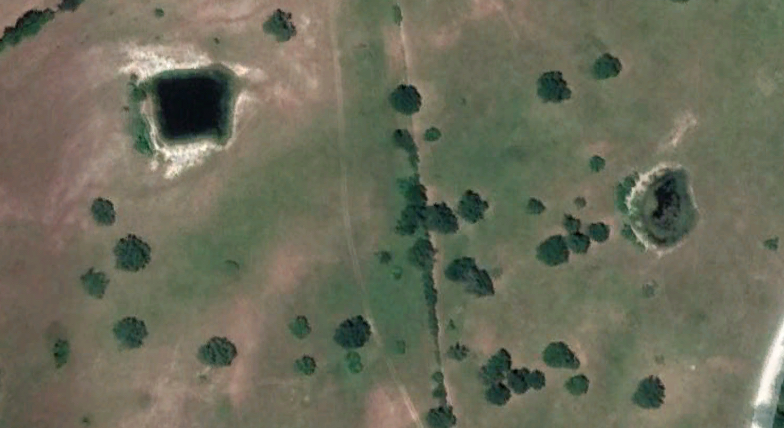
*Pro-Tip* For existing ponds, Google Earth offers historical imagery that will allow you to go back in time and see if your pond has ever run dry. These images below are the difference in the fill of 2 ponds between February 2022 and June 2011, one of the worst droughts in history. The left pond clearly is in a better location and retains water even during extreme drought.
Good ponds aren’t cheap. So, if you implement a rotational grazing system or have multiple pastures, you probably don’t want to dig a pond for each. Or you might. Dealers’ choice. But an interesting pasture layout might be to consider a pond split between pastures – so long as your stock don’t swim across and get where they shouldn’t be.
Construction
As I alluded to previously in site selection, the type of soil your pond is made from matters. If you have the option of building between a sand location or a clay location, choose the clay. With a higher Plasticity Index (PI), clay soils are less porous, compact better, and have lower leakage potential. This minimizes leaching of water out the sides and bottom of the pond, as well as creating a better seal around your dam.
Many areas in Southeast Texas have a layer of sandy loam soil on top, with clay somewhere underneath. This may dictate your pond depth by ensuring you dig your pond deep enough to hit clay bottom. Deeper ponds store a greater volume of water, so that may be an additional bonus.
The slope ratio of the sides on a pond is a frequently overlooked factor. You should be looking for a steep slope on the sides, probably in the neighborhood of a 2:1 slope. This is to minimize growth of aquatic vegetation along the sides. As you design your pond, you may want to consider keeping one side shallower so livestock and wildlife can easily water.
A spillway determines your maximum fill level of the pond. It is incredibly important the spillway is lower than the dam. As your pond nears maximum capacity, you want extra water to exit via the spillway, instead of running over the top of the dam. If water is routinely battering your dam and spilling over, you can be confident it will begin eroding it. Left unchecked, this can cause a blow-out at the dam. The spillway should be located somewhere water can exit the pond with minimal erosion.
Here’s some other factors to consider if you want to utilize your pond for recreational opportunities. When it comes to fish, they will need some kind of cover. This may be grasses, logs, or underwater “fish teepee’s”. Different species of fish have different requirements for food sources and breeding areas. I’m not an avid fisher, so I won’t delve too deep into this topic. Alternately, waterfowl will be drawn to areas with plenty of surface vegetation for shelter and feeding, so you may wish to have shallow slopes on your pond to encourage growth of those plants. Deer will look for water sources with adequate ground cover nearby. They are unlikely to feel safe watering at a location that is out in the open.
Maintenance
With proper construction, pond maintenance should be minimal. Over the years, you will likely need to come in and clean out the pond as silt is washed into it. This typically involves draining it and removing the silt and pesky vegetation. You may also need to reshape the sides and dam. On average, a pond will need to be cleaned out every 10-20 years.
Checking your dam and spillway function routinely will prevent any major catastrophes. Make sure to examine the backside of the dam for erosion or water seeping through. When your pond is at max capacity, check to see if water is exiting via the spillway before it reaches the level of the dam.
If you are in a position where rampant pond vegetation is detrimental to your goals, you may consider managing it with pesticide applications. Judicious use of pesticides is critical. Proper identification of target plant species, careful application of the correct pesticide, and knowledge of its impact on livestock and wildlife are all going to be important factors. Most pesticides will require a hiring a licensed applicator, who should be able to help you select the most effective strategy with minimal negative consequences.
So, there you have it. The long, and the short, of building a pond. As I put this article together, I was surprised at how many times I felt like I needed to add another consideration. Clearly, there’s more to it than even I thought!
 Home
Home 
Leave a comment