When Purchasing orse Property
Prior to becoming involved with show cattle, I was a crazy horse girl. In fact, I still have 2 of the 3 horses that we showed heavily when I was younger. Because of that experience, I’ve had the fortune of seeing plenty of different approaches and ideas when it comes to barns and facilities. Here are some of my recommendations on what to look for when purchasing a new property or planning for a new one.

Drainage
In my part of the world, few things cause as many issues with horses as moisture. From rain rot to thrush, it’s a constant battle to prevent unwanted water in and on your horse. Adequate drainage is imperative to keeping pens dry. Choosing footing with high permeability, like sand, is a great start. We have also found it helpful to have plenty of ground slope away from the barn in our runs and a gutter system that funnels water from the roofline underground and away from pens. Other solutions include placement of a grid-like panel underneath sand footing or french-drains placed at water-prone areas.
Pasture
It’s common to keep horses in a smaller pastures than cows for ease of catching and supplemental feeding. But keep in mind, stocking your horses at a high rate without any pasture rest can result in reduced soil fertility and grass growth. Think ahead to ways of implementing rotational grazing systems if the property you like only has 1 pasture. Would you be able to easily add cross-fencing and still have shelter, food, and water for your horses?
Manure Management
Manure happens. In fact, it happens 4-12 times per day per horse. Notice if a property has a compost pile, preferably far away from the barn, or if they have large pasture and elect to spread it. Composted manure from a pile can be valuable when used as a fertilizer for pasture, just make sure you have the equipment to do it. Look for effective tools and a convenient layout to help bring the manure from the barn to a compost pile, then from the compost pile to the pasture for spreading. Your back will thank me later.
Fly Control
Fly season is about 9 months out of the year in Southeast Texas. While spraying your horses with fly spray is effective, the cost of constant reapplication can be overwhelming. And those stinky fly trap bags hanging from the rafters full of dead flies can be both an eyesore and an overwhelming stench. Keeping manure away from the barn is the first step in reducing flies, but this can be coupled with other methods to achieve a significant reduction. Barns equipped with overhead misting systems can be a handy tool and allow you to also prevent other unwanted flying pests like mosquitos. Don’t forget to consider biocontrol products like Fly Predators or BioWorma or feed-through fly control like Simplifly when creating a holistic approach to fly management.
Fencing
We’ve all had or seen a good horse ruined by a run-in with barbed wire. While effective at fencing large areas (say 10+ acres), fencing with barbed wire in smaller areas is asking for trouble. Look for fencing around barns and runs that has rolled edges so hooves and legs can easily slide off. And make sure that fencing material is kick-proof – think pipe fencing, not plastic. In stalls, be mindful of tin, or old, rotten wood. These can lead to serious injuries if, and when, your horse decides to test their strength by pawing or kicking at dinner time. In larger paddocks, look for properties that are fenced with smooth wire (4-strand+ is a bonus), panel fencing, or electric wire/net.
Hay Storage
Nothing is more of a pet peeve to me than seeing stunning barns with hay stacked in a stall or in the aisle. Better yet, having to manually unload square bales, drag them 50 feet to the back of the barn, and then re-stack them. Identifying facilities with effective hay storage will save your back and arms a lot of miles. Look for covered storage areas near, or in, the barn with lots of room, hard floors, and good lighting. The best hay barns are tall (15+ feet to allow equipment to stack hay), have concrete floors to minimize waste and hay rot, and have 4-sides of weather protection.
Pest Control
Rodents love horse feed. Storing sacks of feed in bins with lids is a great way to reduce the presence of rodents, but may be impractical when buying feed by the pallet. One of the most effective methods is the barn cat, so make sure to include it in the conveyance of the property.
Facility Layout and Amenities
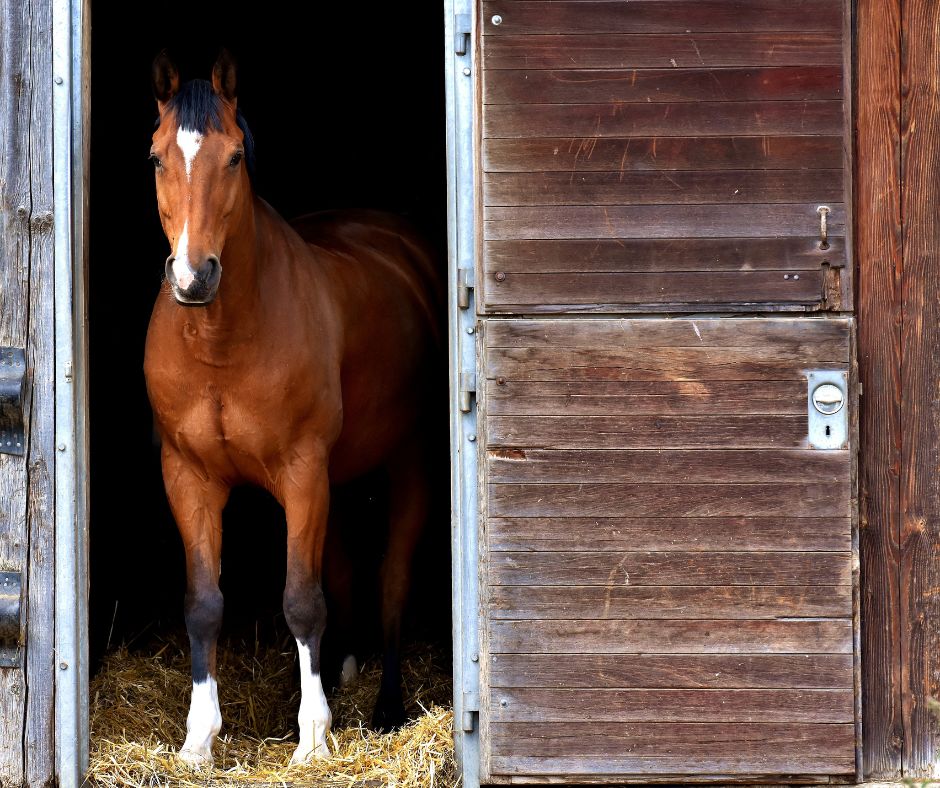
When planning your future barn or looking at an existing one, stall size, barn layout, and amenities will make or break your enjoyment and use. Look for large stalls (14 x 14 or larger), with easy access to exercise runs or pasture. Barns with stud stalls or foaling stalls are a plus! Make sure there is plenty of room to get a truck and trailer into your barn in case of emergencies. In your tack room, make sure to have electric and space for a fridge, sink, and hot water heater. Plenty of wall space for bridle racks, blanket storage, and saddle racks is a must. Don’t forget to look for barns with adequate lighting. I’ve never heard anyone in a barn say “I wish it wasn’t so bright in here”. Overhead water and electric will make your barn feel extra luxurious, but can easily be retrofitted if needed.
Trailer Parking
Having a dry area with lots of room to turn trailers around is a necessity. Notice if properties have circle drives or extra-wide driveways and what type of base material they have used. Can you pull into the barn if needed? Once finished with the trailer, is there an easy place to clean it out, either near a wash rack or near the manure pile? What about parking? Look for properties with a designated trailer parking spot that allows them to be out of the way, but easy to hook-up, even in wet conditions.
Dust
On the opposite end of the spectrum from our first topic is dust. It’s not something we routinely deal with in Southeast Texas, but being an Arizona-native, I’ve seen my fair-share of dust issues. Having your house close to the arena may be nice, but when the wind gets to whipping, the inside of your home will be covered in a fine layer of arena sand. Watering arenas or utilizing dust control products may be a way to battle this, but thoughtful placement of facilities will save your wallet in the long-run.
 Home
Home 
Leave a comment